
Best Vacation Rental Software: Complete Guide to Top Solutions
Comparent ·
Managing vacation rentals involves coordinating bookings across multiple platforms, communicating with guests, processing payments, and maintaining properties—all while optimizing revenue and ensuring compliance. The complexity can quickly overwhelm operators using manual processes or basic tools.
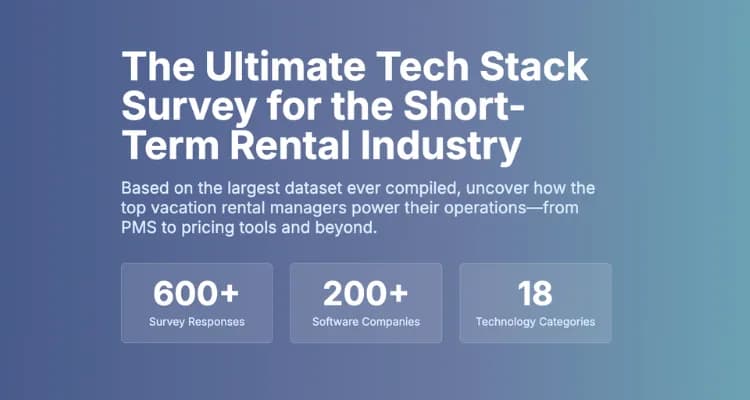
Based on the 2025 Comparent Ultimate Tech Stack Survey of 624 vacation rental companies, successful operations rely on strategic technology adoption across multiple specialized categories rather than single comprehensive solutions. The survey reveals that while some technologies achieve near-universal adoption, others serve specialized needs, creating opportunities for competitive advantage through strategic software selection.
The data shows clear market leaders and adoption patterns across 18 technology categories, providing definitive guidance for operators building their technology stack. Understanding actual usage patterns rather than marketing claims enables informed decision-making about which software investments provide genuine operational value.
This comprehensive guide examines the complete vacation rental technology landscape based on real market data, helping operators make strategic software decisions aligned with industry best practices and proven adoption patterns.
Key Takeaways
- Technology adoption varies dramatically across categories, from universal (PMS 100%) to minimal (guest screening 2.9%)
- Market leaders show clear dominance in most categories, indicating proven solutions worth prioritizing
- Strategic technology selection based on business sophistication and scale provides competitive advantages
- Integration between universal technologies (PMS, OTAs, payment processing) forms the foundation for operational success
The Vacation Rental Technology Landscape
The 2025 Comparent survey provides unprecedented insight into actual technology adoption across the vacation rental industry, revealing both universal requirements and specialized opportunities.
Universal Technology Infrastructure
Three technology categories achieve or approach universal adoption, forming the essential infrastructure for vacation rental operations:
Property Management Systems (100% adoption): Every surveyed operator uses a PMS, with Hostfully leading at 25.6%, followed by Guesty (19.8%) and Track (15.3%). This universal adoption indicates PMS selection as the foundational technology decision.
Online Travel Agencies (100% adoption): All operators use at least one OTA platform, with Airbnb dominating at 94.8%, Vrbo at 88.6%, and Booking.com at 65.2%. Multi-platform distribution has become standard rather than advanced strategy.
Payment Processing (100% adoption): Universal payment processing adoption shows Stripe leading with 54.6% market share, followed by Lynnbrook Group (12.9%) and Ascent Payment Solutions (8.4%).
High-Adoption Categories
Revenue Management (91.9% adoption) shows PriceLabs dominating with 42.1% share, followed by Wheelhouse (16.5%) and Beyond (12.9%). The high adoption rate indicates revenue optimization has moved from experimental to essential.
Insurance (68.6% adoption) demonstrates RentalGuardian leading at 13.9%, followed by Generali (13.3%) and Red Sky (9.5%). The moderate adoption with significant fragmentation suggests diverse coverage needs.
Emerging and Specialized Categories
Several categories show low adoption rates, representing either early-stage technologies or specialized solutions:
Guest Screening (2.9% adoption) with Operto leading the minimal market Financial Management (5.0% adoption) dominated by Topkey Digital Guidebooks (12.0% adoption) led by Touchstay Smart Home & Access Control (17.0% adoption) showing Point Central leadership
Strategic Technology Gaps
The survey reveals significant market gaps in several categories:
Channel Management: Only 34.7% use dedicated tools despite 100% OTA adoption Operations Management: Just 26.5% use specialized solutions Guest Communications: Only 22.2% adopt dedicated platforms Market Data: Merely 32.9% use specialized analytics tools
These gaps represent opportunities for competitive advantage through strategic technology adoption in underserved categories.
Essential Vacation Rental Software Categories
Understanding the technology categories and their adoption patterns helps operators prioritize software investments based on proven value and market validation.
Foundation Technologies (90%+ Adoption)
Property Management Systems serve as the operational foundation, requiring careful selection as they influence all other technology integration decisions. The market concentration around Hostfully, Guesty, and Track provides clear guidance for platform evaluation.
Revenue Management has achieved near-universal adoption (91.9%), indicating dynamic pricing capabilities have become essential for competitive operations. PriceLabs' market dominance suggests proven effectiveness across diverse property types and markets.
Payment Processing universal adoption makes processor selection crucial for operational efficiency and guest experience. Stripe's market leadership indicates comprehensive capabilities meeting diverse vacation rental requirements.
Strategic Enhancement Technologies (25-70% Adoption)
Channel Management low adoption (34.7%) despite universal OTA usage suggests most operators manage platforms manually or through PMS integrations. TrackDistribution's leadership among adopters indicates value for systematic coordination.
Market Data moderate adoption (32.9%) with Key Data Dashboard leading suggests competitive intelligence provides advantages for sophisticated operators.
Operations Management limited adoption (26.5%) with Breezeway dominance indicates systematic coordination becomes valuable for larger or more complex operations.
Specialized and Emerging Technologies (<25% Adoption)
Guest Communications (22.2% adoption) with StayFi leadership suggests automation benefits specific operator segments seeking enhanced guest experience delivery.
Smart Home & Access Control (17.0% adoption) represents early-stage technology with Point Central leading adoption among tech-forward operations.
Digital Guidebooks (12.0% adoption) shows Touchstay leadership in serving operators prioritizing premium guest information delivery.
Financial Management (5.0% adoption) minimal market with Topkey dominance suggests specialized needs rather than universal requirements.
Guest Screening (2.9% adoption) represents the most specialized category with Operto leading minimal adoption among risk-conscious operators.
Technology Integration Strategy
The survey data reveals clear patterns for building effective vacation rental technology stacks based on business sophistication and operational complexity.
Foundation-First Approach
Phase 1: Essential Infrastructure
- Property Management System selection (Hostfully, Guesty, or Track based on needs)
- Payment processing integration (Stripe for comprehensive capabilities)
- OTA platform optimization (Airbnb, Vrbo, Booking.com)
Phase 2: Revenue Optimization
- Revenue management implementation (PriceLabs for market-leading capabilities)
- Insurance coverage evaluation (RentalGuardian, Generali, or Red Sky)
Phase 3: Operational Enhancement Based on business scale and sophistication:
- Channel management for systematic multi-platform coordination
- Market data for competitive intelligence and optimization
- Operations management for systematic property coordination
Business Scale Considerations
Small Operations (1-10 properties): Focus on universal technologies with simple implementations. Manual coordination often suffices for categories showing low adoption rates.
Mid-Size Operations (11-50 properties): Add channel management and operations management as systematic coordination becomes valuable. Market data provides competitive advantages.
Large Operations (50+ properties): Comprehensive technology adoption across most categories, with specialized tools for guest communications, smart home integration, and advanced analytics.
Integration Quality Focus
The correlation between technology sophistication and business success suggests integration quality matters more than feature quantity:
API-based integrations between PMS, revenue management, and payment processing ensure seamless data flow and operational efficiency.
Unified reporting across integrated systems provides comprehensive business intelligence without manual data compilation.
Workflow automation through integrated systems reduces manual coordination requirements as operations scale.
Platform Selection Framework
The survey data provides clear guidance for evaluating software platforms based on market validation and proven adoption patterns.
Market Leader Evaluation
Proven adoption patterns indicate platforms serving significant user bases have achieved product-market fit and operational reliability.
Market concentration in most categories suggests dominant platforms offer superior value propositions justified by widespread adoption.
Integration capabilities with market-leading platforms in other categories ensure comprehensive technology stack coordination.
Feature vs. Adoption Analysis
High-adoption categories (PMS, revenue management, payment processing) require platform selection based on specific feature needs within proven market leaders.
Low-adoption categories require careful cost-benefit analysis to determine if specialized solutions provide sufficient value over manual processes or basic alternatives.
Emerging categories (smart home, digital guidebooks) may offer competitive differentiation opportunities for operators seeking premium positioning.
Strategic Investment Prioritization
Universal technologies require immediate attention and budget allocation as operational necessities.
High-adoption technologies should be prioritized based on business model and competitive requirements.
Specialized technologies merit evaluation based on specific business needs and differentiation strategies rather than universal adoption.
Implementation Best Practices
The survey findings suggest specific approaches for successful vacation rental technology implementation based on proven adoption patterns.
Phased Implementation Strategy
Start with universal technologies to establish operational foundation before adding specialized tools.
Prioritize integration quality over feature quantity to ensure seamless operations across technology stack.
Scale complexity gradually as business sophistication and operational requirements justify additional technology investment.
Vendor Selection Criteria
Market position within survey results indicates proven value and user satisfaction across diverse operational requirements.
Integration capabilities with other market-leading platforms ensure comprehensive technology stack coordination without operational silos.
Support quality and user community size correlate with market share, providing better resources and problem resolution.
Success Measurement
Operational efficiency improvements through reduced manual coordination and increased automation capabilities.
Revenue optimization through enhanced pricing, distribution, and guest experience capabilities.
Competitive positioning relative to operators using basic or fragmented technology approaches.
Future Technology Trends
The survey data suggests several emerging trends that will shape vacation rental technology development and adoption patterns.
Category Maturation Patterns
High-adoption categories will focus on feature enhancement and deeper integration rather than market expansion.
Low-adoption categories represent growth opportunities as barriers to entry decrease and value propositions improve.
Emerging categories may achieve broader adoption as technology costs decline and integration capabilities improve.
Integration Evolution
Platform consolidation may occur as PMS providers expand into adjacent categories rather than operators managing multiple specialized tools.
API standardization will enable better integration between specialized platforms serving different operational functions.
Workflow automation will increase across integrated technology stacks, reducing manual coordination requirements.
Market Development
Specialized solutions will continue serving specific operational needs rather than achieving universal adoption.
Technology sophistication will increasingly correlate with operational success and competitive advantage.
Strategic technology selection will become more important than comprehensive technology adoption for business success.
Frequently Asked Questions
Understanding vacation rental software requires recognizing the diverse adoption patterns and strategic considerations revealed by comprehensive industry survey data.
What are the most essential software categories for vacation rental success?
Based on the 2025 Comparent survey, three categories achieve universal adoption and form essential infrastructure: Property Management Systems (100%), Online Travel Agencies (100%), and Payment Processing (100%).
Revenue Management nearly achieves universal adoption at 91.9%, indicating dynamic pricing has become essential for competitive operations.
These four categories represent the foundation requirements for successful vacation rental operations, with other categories serving enhancement or specialization functions.
Strategic success depends on selecting market-leading platforms within these essential categories rather than adopting comprehensive solutions across all possible technology areas.
How do vacation rental technology needs vary by business size?
The survey data shows clear correlations between business sophistication and technology adoption across specialized categories.
Small operations typically focus on universal technologies (PMS, payment processing, OTAs) with manual coordination for other functions.
Mid-size operations add channel management (34.7% overall adoption) and operations management (26.5% adoption) as systematic coordination becomes valuable.
Large operations demonstrate higher adoption across most categories, using technology integration for competitive advantage and operational efficiency at scale.
Which software platforms dominate their respective categories?
The survey reveals clear market leaders across most technology categories:
Property Management: Hostfully (25.6%), Guesty (19.8%), Track (15.3%) Revenue Management: PriceLabs (42.1%), Wheelhouse (16.5%), Beyond (12.9%) Payment Processing: Stripe (54.6%), Lynnbrook Group (12.9%) OTAs: Airbnb (94.8%), Vrbo (88.6%), Booking.com (65.2%)
These market concentrations indicate proven value propositions and operational reliability worth prioritizing in platform selection decisions.
Should operators adopt comprehensive platforms or specialized tools?
The survey data suggests successful strategies vary based on business complexity and operational requirements rather than universal approaches.
Universal technologies (PMS, payment processing, OTAs) require strategic platform selection within proven market leaders.
Specialized categories show diverse adoption patterns suggesting careful cost-benefit analysis before investment in tools serving minority market segments.
Integration quality between platforms appears more important than comprehensive feature sets within single platforms for operational success.
What technology gaps represent the biggest opportunities?
Several categories show significant gaps between operational needs and specialized tool adoption:
Channel Management: Only 34.7% use dedicated tools despite 100% OTA adoption Operations Management: Just 26.5% use systematic coordination tools Market Data: Only 32.9% use competitive intelligence platforms Guest Communications: Just 22.2% use automated messaging solutions
These gaps represent opportunities for competitive advantage through strategic technology adoption in underserved but valuable operational areas.